Menu
What are the Best Materials for your Cabinets? (Boxes and Faces)
When planning a kitchen remodel, one of the most significant decisions is selecting the right cabinet materials. Cabinets are usually made of two parts: the box (the structure/frame) and the doors and drawer fronts (the visible face of the cabinet). Each part can be made from different materials, and understanding the pros and cons of each will help you make the best decision for your budget, preferences, and goals.
Plywood
Plywood is one of the most common and preferred materials for cabinet boxes. It’s made by layering thin sheets of wood veneer, glued together with alternating grain directions for strength.
Pros: Strong, durable, and resistant to warping. Holds screws well, which makes it a reliable option for attaching hinges and drawer slides. Moisture-resistant compared to particleboard, making it ideal for kitchens.
Cons: More expensive than MDF or particleboard. Not always perfectly smooth, which may require extra finishing or edge banding.
MDF
MDF (Medium-Density Fiberboard) is engineered from wood fibers and resin, pressed into dense panels. It’s smooth, stable, and easy to machine into precise cuts.
Pros: Very smooth surface, perfect for painted finishes. More affordable than plywood. Resistant to cracking and splitting. Great for modern kitchens with sleek lines. Cons: Heavier than plywood. Not as strong when holding screws or hardware. Prone to swelling or damage if exposed to water for long periods.
Particleboard
Particleboard is made from compressed wood chips and resin. It’s the most budget-friendly option, often used in ready-to-assemble (RTA) cabinets
Pros: Very affordable. Lightweight, making it easier to transport and assemble. Works well when covered with laminate or melamine for a clean look.
Cons: Least durable of the three. Prone to sagging under heavy weight. Highly vulnerable to water damage and doesn’t hold screws as well.
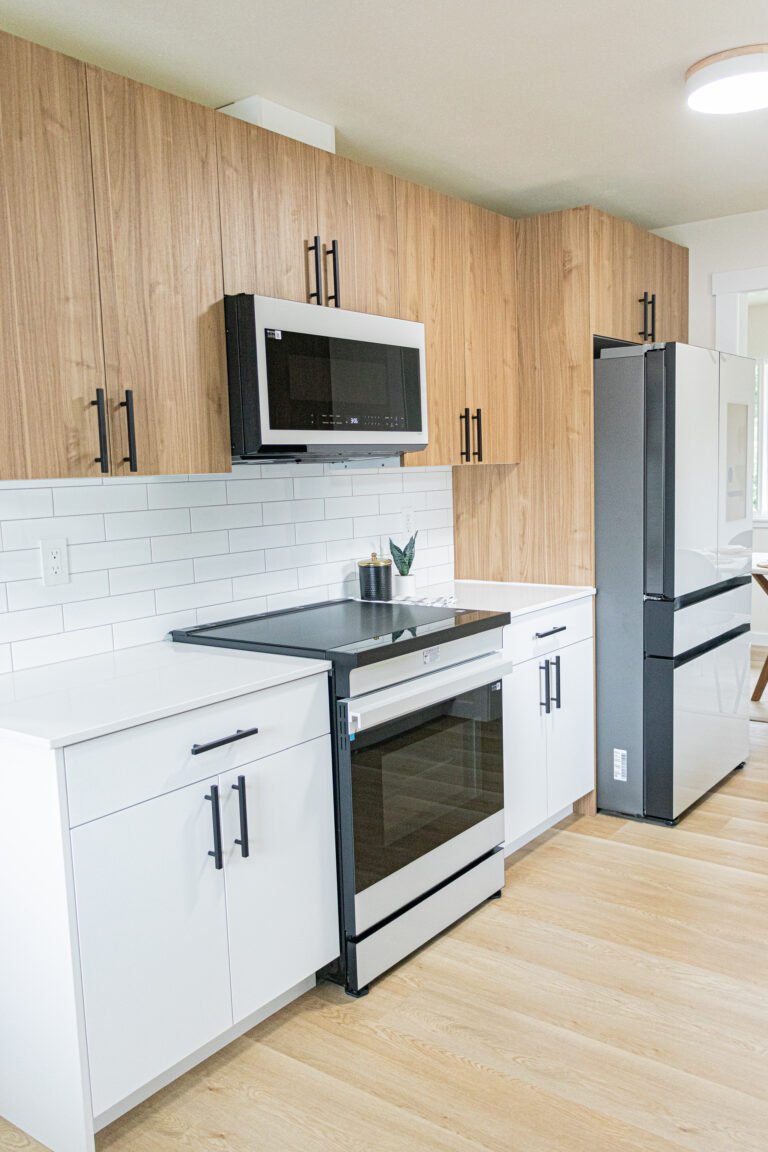
Conclusion #1
When choosing cabinet box materials, it really comes down to balancing budget, durability, and style preferences. If you want long-lasting strength and don’t mind spending a little extra, plywood is widely considered the best option. It can handle everyday wear and tear while giving you peace of mind in high-moisture areas like kitchens and bathrooms.
For homeowners focused on a sleek painted finish or a modern design, MDF is an excellent choice. It gives a flawless surface for paint and offers a clean, uniform look — just keep it away from excessive moisture.
If you’re working with a tight budget or need a quick solution, particleboard can work, especially if it’s protected with laminate. However, it may not last as long as the other materials.
Overall, if you want cabinets that balance durability and value, plywood is the top pick for cabinet boxes, with MDF coming in as a strong option for certain design styles. Particleboard works best for temporary or budget-friendly remodels where cost is the priority.
Cabinet Door & Face Materials
The cabinet doors are the most visible part of any kitchen — they define your style, set the tone for the entire space, and influence both the durability and price of your remodel. While cabinet boxes provide the structure, the door material and finish determine how your kitchen will look and perform over time.
In this section, we’ll explore the most popular cabinet door materials, their pros and cons, and which options work best for different kitchen styles and budgets — helping you make a confident, informed decision for your next remodel.
Solid Wood
Solid wood doors made from natural lumber such as oak, maple, birch, cherry, or walnut, solid wood are classic and versatile. The more expensive wood, like rift white oak or walnut usually stained or finished with a clear finish, while less expensive wood, like maple or birch, is used a lot for painted cabinet faces, especially if it’s 5 5-piece cabinet door style.
Pros: Strong and durable with unique natural beauty. It can be refinished if scratched. Works well in traditional and high-end kitchens.
Cons: Some wood is expensive, and all wood is sensitive to humidity and temperature changes, which can cause warping or cracking.
Wood Veneer
Veneer doors feature a thin layer of real wood applied over a stable core material like MDF or plywood. This approach offers the beauty of real wood while minimizing the cost and weight. Veneers can be stained or sealed to achieve a natural wood look without using solid lumber.
Pros: Real wood appearance at a lower price, resistant to warping, and environmentally friendly since it uses less solid wood.
Cons: The thin surface can chip or peel if damaged, and refinishing is limited compared to solid wood.
MDF
MDF doors are made from fine wood fibers bonded under pressure, resulting in a smooth, even surface. They’re ideal for painted finishes and are often used in shaker or flat-panel styles because they don’t have visible grain. MDF also works well with thermofoil coatings that add extra durability and moisture resistance.
Pros: Affordable, smooth surface perfect for painting, and less likely to warp compared to solid wood.
Cons: Can swell or get damaged if exposed to moisture and may not hold screws as well as natural wood. With good sealing and care, it can last many years and look just as elegant as solid wood.
Particleboard
Particle board is made from compressed wood chips and resin. It’s the most budget-friendly option for cabinet doors and is often covered with a laminate or thermofoil surface for a smooth, easy-to-clean finish. While not as strong as plywood or MDF, it’s a cost-effective option for homeowners on a tight budget.
Pros: Inexpensive, lightweight, and available in many colors and finishes when laminated.
Cons: Low resistance to moisture and impact, and can easily swell or crumble if exposed to water. Best suited for low-traffic areas or short-term kitchen projects.
Thermofoil
Thermofoil cabinet doors are made by applying a thin layer of vinyl to an MDF core using heat and pressure. The result is a smooth, seamless surface that can mimic the look of painted wood or glossy modern finishes. These doors are popular for their affordability and clean appearance, often used in contemporary kitchens where easy maintenance is a priority.
Pros: Highly resistant to staining and easy to clean, with a durable, consistent finish that doesn’t require painting. Available in many colors, textures, and sheens.
Cons: Can peel or bubble if exposed to excessive heat or moisture, and once damaged, it’s difficult to repair. While not as heat-tolerant as painted MDF or laminate, Thermofoil doors are an excellent low-maintenance option for homeowners seeking a sleek, modern look at a reasonable price.
Laminate
Laminate cabinet doors use a synthetic surface fused to a core material like MDF or particleboard. Available in a wide variety of colors and textures, laminate can mimic wood grain or offer sleek modern finishes. It’s a practical choice for contemporary kitchens seeking durability and easy maintenance.
Pros: Highly resistant to scratches, stains, and moisture, easy to clean, and available in endless styles.
Cons: Difficult to repair if chipped or cracked, and edges can sometimes peel with age or heat exposure.
Conclusion
When choosing materials for your cabinets, consider durability, style, and budget. If you want a long-lasting, high-quality kitchen that will stand the test of time, plywood boxes with solid wood or veneer doors are the top choice. They balance strength, beauty, and the ability to be refinished or repaired if needed.
For homeowners who want a sleek painted look at a more affordable price, MDF doors combined with plywood boxes provide an excellent balance. You’ll get durability from the box structure and a smooth, modern finish on the doors.
Budget-conscious remodels can benefit from particleboard boxes with laminate or thermofoil doors. While these won’t last as long, they’re affordable and easy to maintain, making them a solid choice for starter homes, rentals, or temporary kitchens.
Ultimately, there’s no one-size-fits-all answer. The “best” material depends on how long you plan to stay in your home, your budget, and the style you want to achieve. But if you’re aiming for the perfect mix of value, durability, and design, plywood cabinet boxes with veneer or MDF doors are hard to beat.
Recent Posts
Talk to me
Have any questions? I am always open to talk about your kitchen projects or creative opportunities, and how I can help you.
Menu
Design Smarter. Remodel Better. Love Your Kitchen.